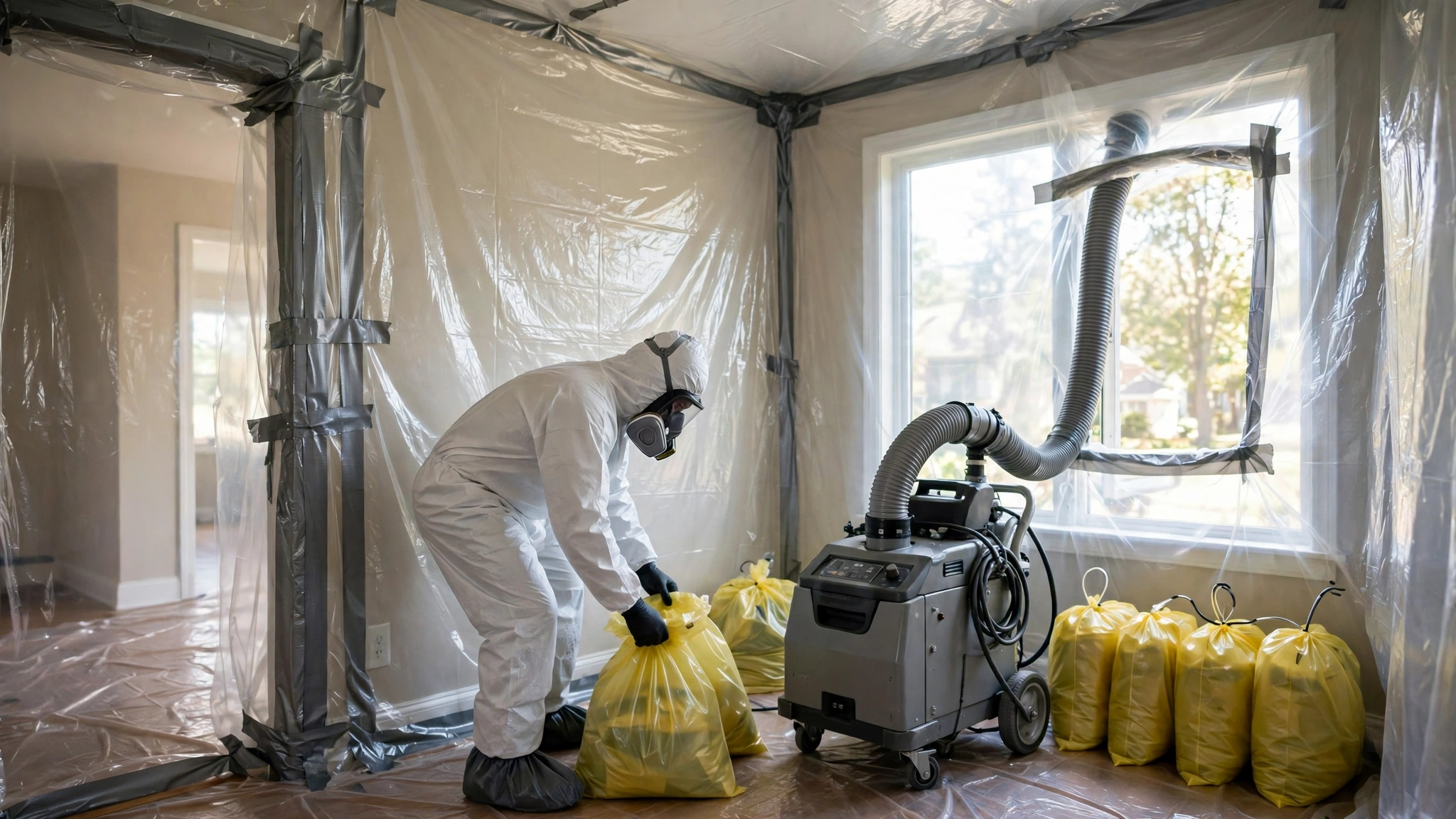
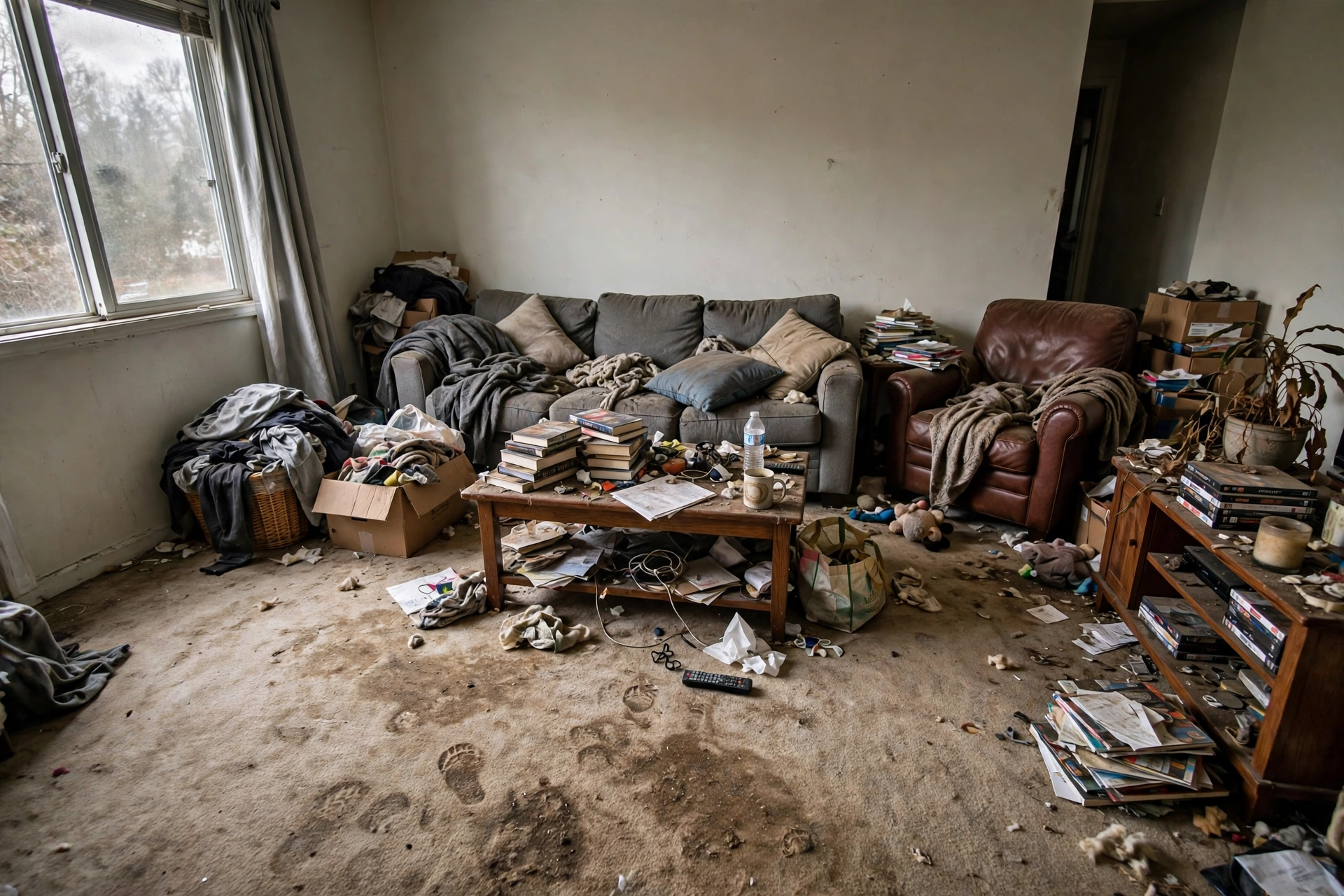
In Lakewood, hoarding-related biohazard cleanup means dealing with the biological side of a hoarded home: human or animal waste, rotting food and material, blocked or unusable bathrooms and kitchens, and contamination that has soaked into floors and surfaces. It is handled in stages rather than as a single hurried clear-out, with decisions about kept items agreed in advance and disinfection following removal in each room. The first step for a household in Lakewood is to close off the rooms that cannot be used safely, leave piles and contaminated material where they are, and ask for an assessment that sets out the stages, the rooms in order, and how privacy will be protected.
Life in Lakewood, Dallas, often centers on tree-canopied streets near the lake, and the homes here, many of them older homes on generous lots, develop hoarding problems room by room rather than all at once. With rambling floor plans with sunrooms and garages, a kitchen can fail while bedrooms still look ordinary, or a back room can hide contamination for a long time while the front rooms stay presentable. Hoarding-related biohazard cleanup in Lakewood therefore begins with a full walk-through, so the plan reflects the real rooms and the real risks, not only the rooms a visitor happens to see. The setting in Lakewood is tree-canopied streets near the lake, which affects how waste is carried out, where vehicles wait, and how discreetly the visit can be arranged. In Lakewood, that means the first conversation covers rooms, access, and kept items together, rather than treating clearing as a separate task from planning.
Hoarding situations develop slowly, and the health risks develop with them. Blocked exits and pathways raise the chance of falls, rotting material feeds pests, and waste near food preparation areas creates ongoing exposure for everyone in the home, especially children and older adults. Biohazard cleanup addresses those risks in order of harm, not in order of appearance: sanitation first, then the rooms that affect sleep and food, then storage and secondary spaces. That ordering keeps the household safer sooner, even when the full job takes several visits. With older homes on generous lots common in Lakewood, the plan names which rooms are tackled first and which rooms stay usable, so the household is never left without a safe space. Access in Lakewood usually means long driveways with side-yard access, so the staging plan is agreed before anything is moved, and the route through the home is kept clear and contained. For homes in Lakewood, that general picture is then fitted to the actual rooms, so the plan reflects rambling floor plans with sunrooms and garages rather than a generic layout.
Finally, the work is judged by the rooms, not by the volume removed. A home where three rooms are fully disinfected and usable is in better shape than a home where every room was half-emptied and none was finished. That is why each stage ends with a check: surfaces inspected, odor noted honestly, pathways confirmed clear, and the room either handed back or listed for a further stage. The household can see and feel the difference, room by room, as the job moves forward. In Lakewood, Dallas, older homes on generous lots shape the work, because rambling floor plans with sunrooms and garages change how rooms connect and where accumulated material tends to collect. Because Lakewood homes often have rambling floor plans with sunrooms and garages, the first walk-through looks at every room in turn, including storage areas that are easy to overlook. In Lakewood, the household can see that approach working in the first finished room, which often changes how the rest of the job feels.
Hoarding-related biohazard cleanup in Lakewood: local factors
Storm-season water routes in Lakewood
Heavy Dallas rain can push drain water into ground-floor rooms, garages, and lower levels, and in a hoarded home that water meets piles and waste already on the floor. The result is contamination spread across a wider area than the original accumulation, including into flooring and wall bases. Assessment here always checks for water routes, staining near drains, and soft or swollen flooring, and any room touched by drain water is treated as contaminated from the start rather than simply dried and tidied. Daily life in Lakewood centers on tree-canopied streets near the lake, and a cleanup plan here respects that rhythm, keeping disruption to shared spaces as low as possible. In Lakewood, Dallas, older homes on generous lots shape the work, because rambling floor plans with sunrooms and garages change how rooms connect and where accumulated material tends to collect. For a household in Lakewood living among older homes on generous lots, that means the stage plan names this factor explicitly, rather than treating it as background.
Bathrooms and kitchens under strain in Lakewood
In a hoarded home the two rooms that matter most for health are often the first to fail: kitchens buried under packaging and decayed food, and bathrooms blocked by stored items or plumbing problems. Dallas humidity makes both worse, because damp waste near food preparation and washing areas keeps odor and contamination active. The staged plan usually restores a working bathroom and a usable kitchen early, even when other rooms are still queued, because safe washing and cooking change daily life more than any other single step. With older homes on generous lots common in Lakewood, the plan names which rooms are tackled first and which rooms stay usable, so the household is never left without a safe space. Access in Lakewood usually means long driveways with side-yard access, so the staging plan is agreed before anything is moved, and the route through the home is kept clear and contained. For a household in Lakewood living among older homes on generous lots, that means the stage plan names this factor explicitly, rather than treating it as background.
Humidity and warm air in Lakewood
Dallas summers stay warm and damp for months, and a closed, cluttered room in that climate holds moisture in carpets, soft furnishings, and piles of material. Odor builds faster than many households expect, and contamination that might stay stable in a dry climate keeps spreading here. The crew therefore treats airflow as part of containment: doors to clean rooms stay closed, air is not blown from a work room through the rest of the home, and each finished room is dried and aired before it is handed back, so dampness does not undo the disinfection. In Lakewood, Dallas, older homes on generous lots shape the work, because rambling floor plans with sunrooms and garages change how rooms connect and where accumulated material tends to collect. The setting in Lakewood is tree-canopied streets near the lake, which affects how waste is carried out, where vehicles wait, and how discreetly the visit can be arranged. For a household in Lakewood living among older homes on generous lots, that means the stage plan names this factor explicitly, rather than treating it as background.
Ventilation and indoor air in Lakewood
A cluttered Dallas home often has blocked vents, covered windows, and air systems struggling against dust and debris. When rooms are cleared, the air system can pull dust from a work room into bedrooms that were previously clean, which is why containment and a careful ventilation plan come first. Vents in work rooms are covered during clearing, doors stay shut, and finished rooms are aired separately, so the air in the rooms handed back is genuinely cleaner rather than simply redistributed. Access in Lakewood usually means long driveways with side-yard access, so the staging plan is agreed before anything is moved, and the route through the home is kept clear and contained. Because Lakewood homes often have rambling floor plans with sunrooms and garages, the first walk-through looks at every room in turn, including storage areas that are easy to overlook. For a household in Lakewood living among older homes on generous lots, that means the stage plan names this factor explicitly, rather than treating it as background.
What hoarding-related biohazard cleanup covers in Lakewood
The scope of hoarding-related biohazard cleanup is the biological hazard inside the accumulation, not the volume of belongings alone. A home with many books and boxes but no waste, decay, or blocked sanitation is a different job from a home where waste has soaked into carpet, animal waste sits under piles, and a bathroom cannot be used. This service addresses the second kind of home: contaminated material is removed, affected surfaces are disinfected or removed where disinfection cannot reach, and rooms are checked before they return to use. Households are involved at each decision point, so nothing of personal value is treated as waste by default. Daily life in Lakewood centers on tree-canopied streets near the lake, and a cleanup plan here respects that rhythm, keeping disruption to shared spaces as low as possible. In Lakewood, Dallas, older homes on generous lots shape the work, because rambling floor plans with sunrooms and garages change how rooms connect and where accumulated material tends to collect. In Lakewood, the coverage above is applied room by room, so the household can see which rooms need removal work, which need disinfection only, and which are already safe. Coverage on this site is limited to the 15 verified Dallas neighborhoods, with coverage confirmed by ZIP.
Illustrative image, not a specific customer job.Illustrative image, not a specific customer job.Illustrative image, not a specific customer job.Illustrative image, not a specific customer job.
How hoarding-related biohazard cleanup is done in Lakewood
1. Assessment and agreement
Assessment begins with conversation as much as inspection: who lives in the home, which rooms matter most, what items must be protected, and whether family or a representative should be involved in decisions. The walk-through then maps contamination, blocked pathways, and damaged flooring or plumbing, and those notes become the basis for a staged plan the household can approve or adjust. In Lakewood, this stage is planned around long driveways with side-yard access, so the work fits the property rather than forcing a generic sequence.
2. Containment and safe setup
Before clearing starts, the work room is contained: doors to clean rooms are closed, vents are covered where needed, and a clear route is set for carrying material out without crossing rooms that are already safe. Protective equipment is worn where contamination is present, and pets and children are kept out of the work area until that room has been checked and handed back. In Lakewood, this stage is planned around long driveways with side-yard access, so the work fits the property rather than forcing a generic sequence.
3. Staged removal of contaminated material
Removal respects the household's decisions at every step. Keepsakes, documents, and items with personal meaning that were flagged during assessment are separated before general clearing begins, and the crew checks in when an unflagged item of apparent value appears. Waste leaves discreetly and through the proper route, never through ordinary household trash where contamination is involved. In Lakewood, this stage is planned around long driveways with side-yard access, so the work fits the property rather than forcing a generic sequence.
4. Cleaning and disinfection
After removal, the room is cleaned, disinfected, and dried in that order, with drying given real attention in warm or damp conditions. A room that looks clean but stays damp will develop odor again, so airflow and drying are checked before handover rather than assumed. If a surface cannot be disinfected because waste soaked too deeply, that is reported honestly and the surface is removed instead of being presented as clean. In Lakewood, this stage is planned around long driveways with side-yard access, so the work fits the property rather than forcing a generic sequence.
5. Room-by-room check and handover
Handover is a real check, not a formality. The crew confirms the room is clear to walk through, that bathroom or kitchen functions in that room work again, and that no contaminated material remains visible or hidden in the spaces that were opened. Anything still needing attention is listed for the next stage, so the household is never left wondering whether a room is finished or merely tidied. In Lakewood, this stage is planned around long driveways with side-yard access, so the work fits the property rather than forcing a generic sequence.
6. Summary and next stages
When all staged rooms are finished, the final summary records the full scope: rooms handed back, material removed, surfaces disinfected or removed, and any follow-up the household may want to arrange separately, such as repairs or pest treatment. The home is left with usable rooms, clear pathways, and a written record of what was done, which the household can keep for its own reference. In Lakewood, this stage is planned around long driveways with side-yard access, so the work fits the property rather than forcing a generic sequence.
Warning signs to call about
A resident feels unsafe moving through the home, because pathways are blocked, exits are hard to reach, or floors are unstable under piles. In Lakewood, where homes are often older homes on generous lots, that pattern is shaped by rambling floor plans with sunrooms and garages.
A bathroom, kitchen, or laundry area can no longer be used normally, because stored items block fixtures, plumbing is backed up, or the floor around fixtures is soiled. In Lakewood, where homes are often older homes on generous lots, that pattern is shaped by rambling floor plans with sunrooms and garages.
Sleeping areas are lost to accumulation, with beds, floors, or exits blocked, so residents sleep in chairs, in other rooms, or in spaces never meant for sleeping. In Lakewood, where homes are often older homes on generous lots, that pattern is shaped by rambling floor plans with sunrooms and garages.
Important documents, medication, or personal items cannot be found or reached, because the rooms holding them are filled and cannot be searched safely. In Lakewood, where homes are often older homes on generous lots, that pattern is shaped by rambling floor plans with sunrooms and garages.
Pest activity is visible or audible in living areas, storage rooms, or wall cavities, often tracking back to food waste, packaging, and nesting material inside piles. In Lakewood, where homes are often older homes on generous lots, that pattern is shaped by rambling floor plans with sunrooms and garages.
Rooms cannot be entered, cleaned, or assessed normally, because pathways are blocked, doorways are narrowed by piles, or floors are hidden under layers of material. In Lakewood, where homes are often older homes on generous lots, that pattern is shaped by rambling floor plans with sunrooms and garages.
What to do first
Gather any information about plumbing problems, leaks, pest activity, or previous repair visits, because those details help the assessment map contamination that is not visible from the doorway. In Lakewood, this step is planned around long driveways with side-yard access.
Agree within the household, as far as possible, who will make decisions about kept items and who should be present during assessment, so decisions are not improvised on the day. In Lakewood, this step is planned around long driveways with side-yard access.
If anyone in the home feels unwell, has breathing difficulty, or has come into contact with waste, seek medical advice promptly and mention the home conditions so the advice fits the situation. In Lakewood, this step is planned around long driveways with side-yard access.
Keep people and pets out of the rooms most affected, and close those doors so contamination and odor do not travel into rooms that are still usable. In Lakewood, this step is planned around long driveways with side-yard access.
Set aside a clean room or area where kept items can be reviewed safely, away from contamination, so decisions about belongings do not happen inside a work zone. In Lakewood, this step is planned around long driveways with side-yard access.
Keep children and older adults away from work rooms until those rooms have been checked and handed back, and plan sleeping, washing, and cooking around the rooms that remain safe. In Lakewood, this step is planned around long driveways with side-yard access.
When hoarding-related biohazard cleanup is needed in Lakewood
For example, adult siblings might coordinate from different cities for a parent's home in Lakewood, where older homes on generous lots has filled gradually and the parent insists that certain rooms not be touched. Assessment respects those boundaries by mapping the home fully but staging work only in agreed rooms first, with kept items and photographs set aside for sibling review. Written summaries after each stage let siblings who cannot visit follow progress and make decisions together, rather than relying on secondhand reports. For a household in Lakewood, that example shows why the staged plan, the privacy agreement, and the room-by-room checks matter more than speed alone.
For example, an executor might arrange cleanup for a relative's home in Lakewood, where older homes on generous lots holds decades of belongings mixed with waste, decayed food, and animal-related contamination in back rooms. The family lives elsewhere and cannot sort the property in person, so assessment records kept items, documents, and photographs for family review, and summaries after each stage let relatives decide from a distance. The work proceeds respectfully, with nothing of apparent value removed without a family decision. For a household in Lakewood, that example shows why the staged plan, the privacy agreement, and the room-by-room checks matter more than speed alone.
For example, a family might seek help in Lakewood after a pet's health problems reveal waste and contamination inside older homes on generous lots that had gone unnoticed under piles in a spare room. The household wants both the home and the pet's living areas made safe, so assessment maps animal-related contamination separately from general accumulation, and stages restore clean sleeping, washing, and food preparation areas first. The household is advised to keep pets out of work rooms until those rooms are checked and handed back. For a household in Lakewood, that example shows why the staged plan, the privacy agreement, and the room-by-room checks matter more than speed alone.
Scenarios above are hypothetical illustrations, not real customer jobs.
Hoarding-related biohazard cleanup in Lakewood: questions people ask
How does hoarding-related biohazard cleanup work in Lakewood?
Cleanup follows a fixed order inside each room: contain the room, remove contaminated material, disinfect what can be saved, and check the room before handover. General belongings are not treated as waste by default, and items flagged as kept are set aside for household review. Because the order is fixed, a room that is handed back is genuinely finished, rather than emptied in appearance while contamination remains in flooring, grout, or wall bases. Daily life in Lakewood centers on tree-canopied streets near the lake, and a cleanup plan here respects that rhythm, keeping disruption to shared spaces as low as possible.
Do I need to clear or sort anything before the crew arrives in Lakewood?
The household does not need to tidy first, and in contaminated rooms tidying first can make matters worse by moving waste into clean areas. Leave rooms as they are, keep doors to the worst rooms closed, and note any keepsakes, documents, or medication that must be protected. The crew will agree categories for waste, kept items, and items needing a household decision before removal begins, so nothing is decided under pressure on the day. With older homes on generous lots common in Lakewood, the plan names which rooms are tackled first and which rooms stay usable, so the household is never left without a safe space.
What happens to belongings the household wants to keep in Lakewood?
Belongings are protected by the staged method itself. Assessment flags keepsakes, documents, photographs, and items with personal meaning, and those items are separated before general clearing in their room begins. Items that can be cleaned are cleaned; items that absorbed contamination and cannot be disinfected are reported honestly rather than returned as clean. The household reviews kept items in a clean space, away from work zones, so decisions are made calmly rather than beside a pile. In Lakewood, Dallas, older homes on generous lots shape the work, because rambling floor plans with sunrooms and garages change how rooms connect and where accumulated material tends to collect.
How is privacy handled during a cleanup in Lakewood?
Privacy is agreed before work starts, covering visit timing, the route waste takes out of the property, who is present, and what summary is shared and with whom. The crew works within those agreements, keeps the visit as low-key as the property allows, and does not discuss the home with neighbors or building occupants beyond what is strictly needed for access or safety. Households that feel embarrassment about the state of a home often find that this advance agreement matters as much as the cleaning itself. Access in Lakewood usually means long driveways with side-yard access, so the staging plan is agreed before anything is moved, and the route through the home is kept clear and contained.
How long does a staged hoarding cleanup take in Lakewood?
Duration depends on how many rooms are contaminated, how deeply waste has soaked into floors and soft material, and how many stages the household wants to space out. A single heavily affected room can take more than one visit, while a whole property with several contaminated rooms is normally planned across multiple stages with summaries between them. The assessment gives a staged outline rather than a single date, and that outline is updated after each stage as hidden conditions, such as flooring damage, become visible. The setting in Lakewood is tree-canopied streets near the lake, which affects how waste is carried out, where vehicles wait, and how discreetly the visit can be arranged.
What if a bathroom or kitchen cannot be used at all in Lakewood?
An unusable bathroom or kitchen is usually placed early in the staged plan, because safe washing and cooking affect health more than any other single factor. Assessment first establishes why the room cannot be used, whether the cause is blocked fixtures, stored material, plumbing failure, or contamination in flooring, and the stage for that room addresses the contamination so the household can arrange any separate plumbing or fixture attention with a clean, documented starting point. Until the room is handed back, the household plans washing and cooking around rooms that remain safe, and the crew says plainly which those rooms are. Because Lakewood homes often have rambling floor plans with sunrooms and garages, the first walk-through looks at every room in turn, including storage areas that are easy to overlook.
Hoarding-related biohazard cleanup in nearby areas